Us
Studio Kaleidoscope is a practice-based research design studio with a passion for climate-responsive architecture and urban environments.
We believe that all people are entitled to live and work in environments in which they feel secure, happy, inspired, hopeful and connected to nature.

Our mission is to assist, collaborate, promote, and encourage people who understand that buildings, during their life cycle, consume enormous amounts of energy and resources, emitting about 35-40 % of the world’s greenhouse gases, and who would like to reduce or net-zero its impact.
To achieve Biophilia, we will need to go beyond the basics of health, security, safety and energy efficiency.
Biophilic design is an evidence-based design which can be measured both quantitatively and qualitatively. To provide proof for our clients, we have adapted the Stephen R.Kellert's biophilic standards based on six elements and 75 attributes. The six design experiences and attributes of the Biophilic design are:
-
Environmental Features - +
Buildings and/or spaces we design will have characteristics and features of the natural environment such as sunlight, fresh air, plants, animals, water, soils, landscapes, natural colours, and natural materials such as stone and wood.
-
Natural Shapes and Forms - +
The simulation and mimicking of shapes and forms found in nature. These include botanical and animal forms such as leaves, shells, trees, foliage, ferns, honeycombs, insects, other animal species, and body parts. Examples include tree-like columns rising in a building interior to support a roof that projects the feeling of a forest canopy; building shapes that simulate the appearance of bird wings; ornamentation suggestive of a natural form like a crystal or geological feature.
-
Natural Patterns and Processes - +
The elements of natural functions, structures, and principles characteristic, especially those that have been instrumental in human evolution and development. For example, designs that stimulate a variety of senses, simulate the qualities of organic growth, facilitate the organization of complexity, or reflect the processes of aging and the passage of time.
-
Light and Space - +
The element of spatial and lighting features that evoke the sense of being in a natural setting. These include natural lighting, a feeling of spaciousness, and more subtle expressions such as sculptural qualities of light and space, and the integration of light, space, and mass.
-
Place-Based Relationships - +
Connections between buildings and the distinctive geographical, ecological, and cultural characteristics of particular places and localities. These connections can be achieved through incorporating geological and landscape features, the use of local and indigenous materials, and links to specific historical and cultural traditions.
-
Evolved Human Nature Relationships - +
Basic inborn inclinations to affiliate with nature such as the feeling of being in a coherent and legible environment, the sense of prospect and refuge, the simulation of living growth and development, and evoking various biophilic values.

Our practice is particularly passionate about working on residential and educational projects, including the design of:
- new residences and home renovations;
- development of affordable housing models; and
- educational buildings in child-care, school, college and university settings.
We read, research, write, test, experiment, study, draw, model and self-build in the above archetypes with equal enthusiasm and intensity.
We are not 'Instagram designers and architects' as we reject the idea of architecture as a simple background; instead, we believe it is a setting within which we develop our lives.

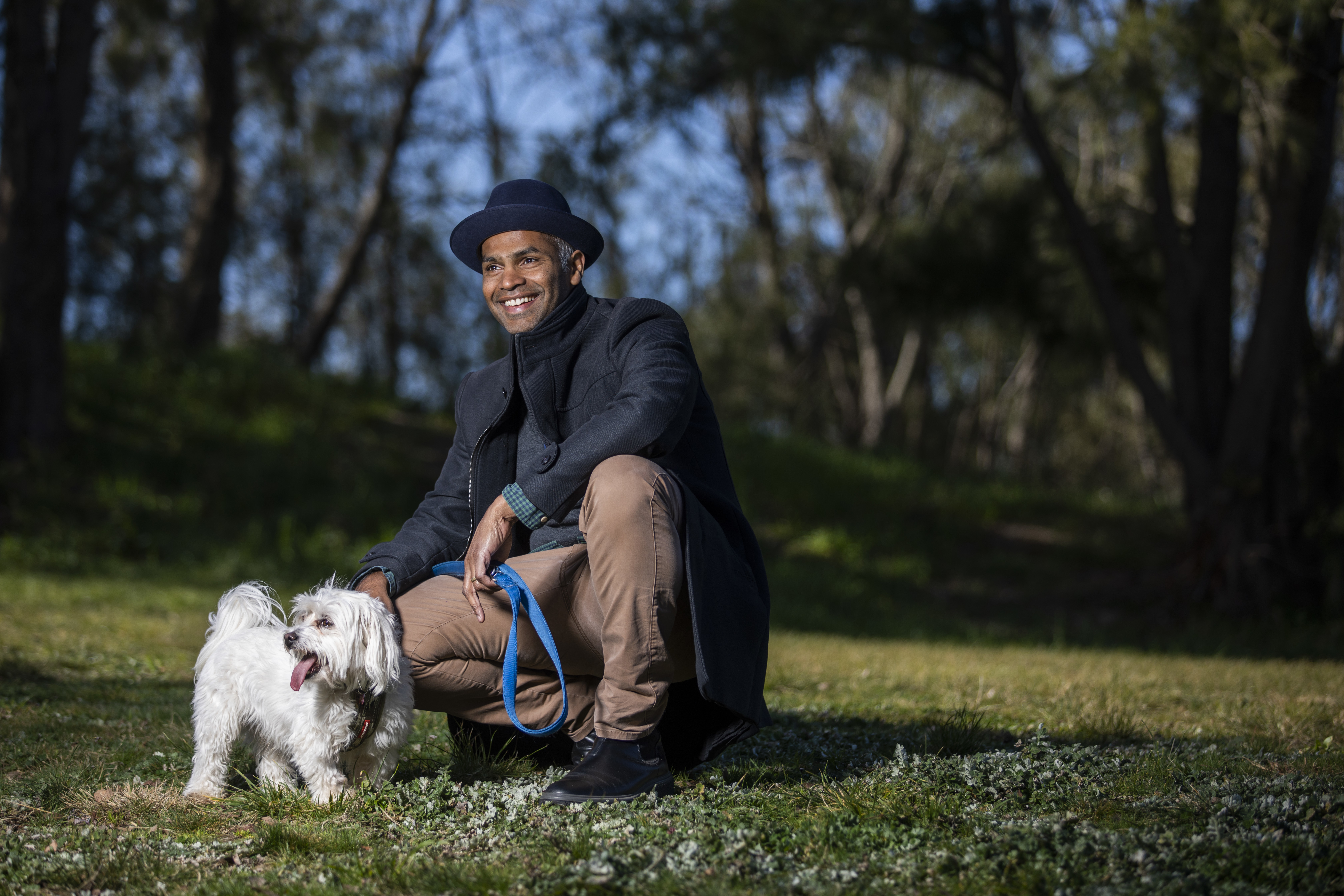
I completed my Bachelor’s in Architecture in India, and in 2004, came to Australia to study a Masters in Sustainable Design at University of Sydney. Upon successful completion, I worked in various large, medium and small architecture firms based in Sydney, Melbourne, Brisbane and Rockhampton.
I became an Australian Citizen in 2007, and in 2009, my family and I moved to Canberra where I worked with the University of Canberra for six years, leading design and project planning activities for the university campus and buildings.
I then moved to work in a multi-disciplinary architecture firm in Canberra as a Senior Designer and Project Architect. In this role, my focus was on preparing tender proposals, fee proposals, sketch designs, managing documentation drawing processes as well as contract administration.
I have experience designing and delivering high-quality built environments across education, residential, government, commercial, health and retail sectors, as well as experience in fit out and master planning projects.
I am currently the Australian Institute of Architects’ ACT Chapter Councillor.
I am excited to now lead Studio Kaleidoscope and look forward to working with you on your built environment project.


Hello, my name is Alfie Bear Kopparapu, and I am the Employee No:2. I lick and safeguard employee No:1. I give him lots of cuddles and look after him, so he doesn’t get distracted at work.
We intend to design mutually reinforcing, interconnected, and integrated architectural solutions between people and nature.
We create more sustainable environments for our clients, in particular, we are interested in design and delivering biophilic buildings which is a concept in existence since the beginning of human evolution. Biophilic design holds that humans have a biological need for connection with nature on physical, mental and social levels. This connection, or lack thereof, affects our wellbeing, productivity and societal relationships. We also intend to develop digital tools that foster communication and facilitate dissemination and research.