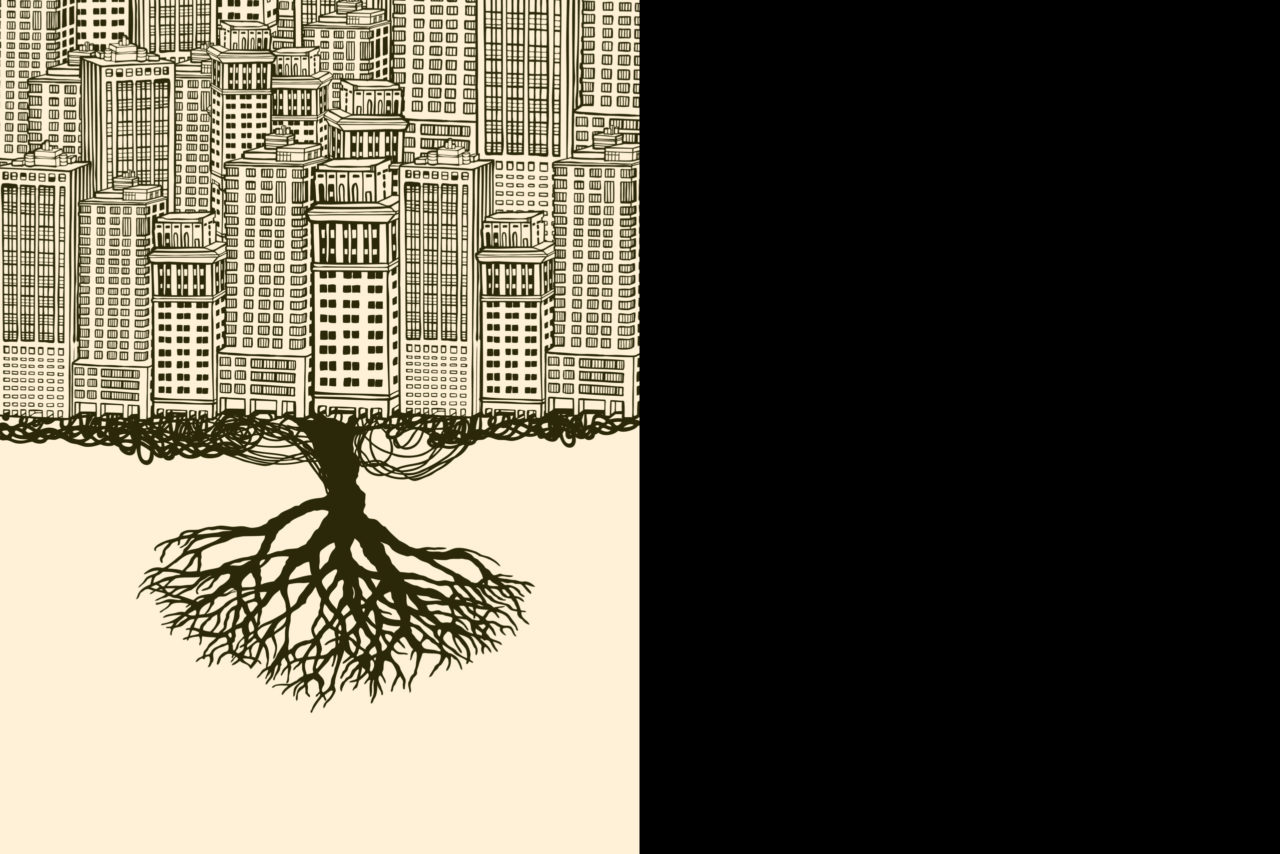
Both Biomimicry and Biophilia sounds similar and has nature as its vital inspiration, but they are slightly different with different aims and objectives. Anyone interested to explore should understand their intentions which will allow constructing the framework during the initial stages of the project.
What is Biomimicry?
According to Webster's dictionary, Biomimicry is the imitation of natural biological designs or processes in engineering or invention.
Biomimicry intends to emulate and mimic natures form, process and systems.
Biomimicry can play a significant influence in industries and technological sectors whereas Biophilic Design majorly practised in architecture, landscape, planning and interior design firms. It provides an innovative method to look at a problem and arrive at a solution.
What is Biophilia?
According to Webster's dictionary, Biophilia is a hypothetical human tendency to interact or be closely associated with other forms of life in nature.
Biophilia is to insert nature and its patterns, symbols, geometries, spatial complexity into built environments. Biophilia has been practised by humanity since the beginning of the creation of cave as-built environment but lost its importance from the industrial age. Recently there has been emergence due to climate change, increase stress levels, obesity, depression, reduced creativity and decreased cognitive performance.
Although many architects and designers do claim to practice many principles of Biophilic design, upon close investigation, one can conclude that their implications cannot be substantiated.
All the architects and designers should be able to demonstrate to the client, and there are tools available from the International Living Future Institute. There are 14 patterns of Biophilic design developed by Terrapin Bright Green which I follow. Here are few if you are interested:
- Does the project provide a visual connection to nature?
- Can the project provide a non-visual connection with nature like natural sounds, edible plants etc. that trigger positive reference to nature?
- Can the project establish any stochastic and ephemeral connections with nature which can be substantiated?
- Many commercial environments engineered to maintain constant air temperature, humidity levels and airflow but are there opportunity to mimic natural situations where subtle changes occur regularly?
- Can the project integrate the touch, hear, feel and look of water as real relaxation?
- Can the project be able to provide dynamic and diffuse light conditions that change over time, similar to nature?
- Can the building occupants can gauge the nature's seasonal changes and systems?
- Does the project exteriors and interiors have embedded biomorphic forms and patterns that imitate nature patterns, textures and arrangements?
- Have all the materials and elements chosen to reflect the local ecology or geology to create a distinct sense of place?
- Is the project able to establish a piece of rich sensory information and spatial hierarchy experience in nature?